
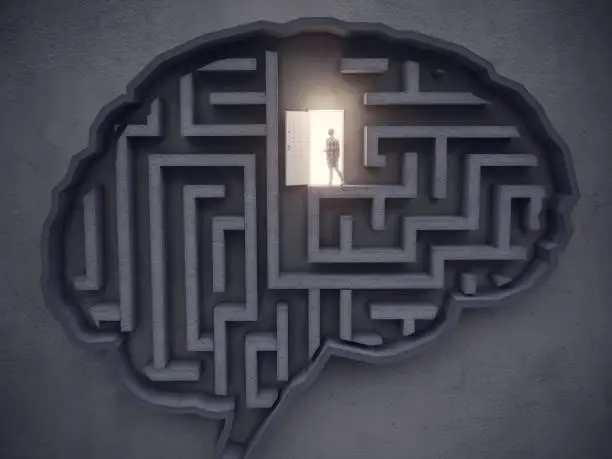
One of the most amazing things about the “brain and creativity” is how that relationship affects essentially all human activities, ranging from problem-solving to emotional expression. When we are involved in creating something, our brains are working at their best. This creative activity accesses different areas of the brain; thus, likely, creativity is not hemispheric but rather a whole-brain process. In other words, creativity engages many connected systems; that is why it is different from general intelligence. Medical studies have revealed that people are not creative solely due to the development of a separate part of the brain. Instead, creativity benefits from the collective function of the various networks in the brain.
Being creative gives us satisfaction and joy in the same way as solving a puzzle or doing something physically enjoyable does. Knowing the reasons that make our brains feel pleasure through being creative can be our guide in turning creativity into a source of good productivity, emotional health, and cognitive flexibility. Well, let’s delve into how the “brain and creativity” are connected and discover the reasons for their harmonious coexistence.
Understanding the Creative Brain: A Complex Network of Connections
The brain that creates rises out of the brain that connects the fewest neural networks. These networks, closely bound together, contribute to the formation of unique concepts, the resolution of difficult problems, and the creation of vivid pictures of the imagination. Contemporary studies have confirmed the importance of three different subnetworks in the process of the creativity realization: the default mode network, the salience network, and the executive functioning network.
These subnetworks show impressive collaboration and thus discredit the wrong idea that the right hemisphere of the brain is the only part associated with creativity. According to current theories, creativity comes from the two halves of the brain, which are the regions working together. Consequently, becoming familiar with the function of these networks will explain the reasons behind creativity that is also enjoyable and effortless.
The Default Mode Network: Where Creativity Begins
The default mode network (DMN) is a very significant part of the creative kind of thinking. Usually, it is activated during breaks, daydreams, and reflection. This network takes care of self-reference, personal experience information, as well as the prediction of the future. Essentially, the DMN is the place in the brain where ideas are born and the person is in some kind of introspective condition.
When the mind starts wandering, the DMN is there to provide support for the processing, helping by using old memories and experiences to bring in new connections between ideas previously not connected. This is an incubation of unique problem-solving solutions and innovative ideas; the process is known to be crucial. Thus, it is not only accidental that people generate their best ideas when they are not concentrate. The DMN gives fertile soil to creativity.
The Salience Network: Filtering and Sorting Ideas
The salience network is considered the brain’s filter and sorter, which is responsible for identifying and arranging points from the universe of thoughts that is the default mode network. It selects both inner and outer factors and designates those that will be included in the list of interesting topics and ideas for further contemplation.
In the process of being creative, one of the most important functions that the salience network has is to identify the ideas and emotions that are most important and to keep them in sight during the development, the creative process, and the recovery time. Such a function allows for clarity and a clear path even without the salience network; the creative process would lose its quality and simply become chaotic, as it would deal with unfiltered thoughts.
The Executive Functioning Network: Turning Ideas into Reality
Where the salience network has recognized the promising concepts, the executive functioning network intervenes to initiate their realization. The main part of this network is in the frontal lobe of the brain, for instance the dorsal lateral prefrontal cortex and the orbital frontal cortex. The executive functioning network includes those functions related to attention, working memory, problem-solving, and decision-making.
The executive functioning network enables individuals to gather their thoughts, make evaluations for potential solutions, and eventually forge definite plans of action. It acts as the necessary base on which creative ideas are embodied in really existing, manifest solutions through artistic expression, scientific innovation, or problem-solving.
Why Creativity Feels So Rewarding
It is this intertwining of the three networks that is responsible for the reason that creativity feels so joyful and satisfying. The co-operation of creativity and brain in the flow state characterizes deep concentration and the state when thoughts begin to stream without much effort being exerted. This state often brings along feelings of joy, satisfaction, and accomplishment.
According to neuroscientists, having creativity leads to the brain’s reward system being activated, hence, there is a release of dopamine, a neurotransmitter that is identifiable with pleasure and motivation. The dopamine released is what is referred to as a positive reinforcement, which simply implies that you are more likely to be engaged in creativeness when this chemical reward strengthens your creative behavior. From the psychological point of view, it is quite normal for your mind to crave something good on both a mental and emotional level.
Creativity and Emotional Well-Being
Being engaged in creative pursuits is not only cognitively but also emotionally rewarding. According to studies, creativity significantly improves mood, helps to lower stress, and, consequently, contributes positively to mental health. Practicing writing, painting, music, or even problem-solving activates emotional expression and cognitive flexibility.
Such a mode of thinking as a creative one could help your brain to develop not traditional emotions but rather those that are unknown. In the end, this might cause you to discover a new person and the world from a different perspective. Furthermore, the link between “brain and creativity” can work extremely well as a therapy for emotional relief and the increase in mental strength.
Creativity’s Impact on Learning and Memory
It is not only the mental process; another very important area that is being affected by creativity is the learning process. As the person thinks through an issue creatively, new connections between the pieces of information are made, which consequently leads to the building of concepts in the mind, having the ability to make available new and multiple layers of understanding.
Creative reasoning is the factor that supports and perpetuates the encoding of the information in the long-term memory more extensively. Furthermore, this not only serves to enhance the capacity for retaining but also to provide instantaneous retrieval of the stored data at the time it is necessary. In a word, it facilitates the improvement of the mental agility and the acquisition of knowledge becomes easier.
Breaking the Myth of Right-Brained and Left-Brained Creativity
During the last few decades, it was commonly believed that people were “right-brained” or “left-brained,” and this stereotype of creativity has long been at the forefront of all creativity-related discussions. If we focus on the earlier theory, the right hemisphere is where creativity is located, while logical thinking and analysis are the domain of the left hemisphere. But nowadays, it is established beyond any doubt that the creative process is a much more complicated thing that requires the activation of many parts and systems of the brain.
The common default mode, salience, and executive functioning networks form a complex interaction that explains why creativity cannot be associated with one brain part only. What’s more, creativity is a combination of different cognitive processes rather than the activity of a single area of the brain. It is a very important discovery for the scientific community and human perception of creativity and its influential impact on human resources have the power of affecting our daily formulas.
How to Boost Your Creativity
Given that you are now aware of your “brain and creativity” relationship, you can take active steps towards improving your creative potential. The ideas below will facilitate your brain in becoming creative:
- Get Involved in Mind-Wandering: Freeing your brain from boundaries will enable it to rove freely around different themes. It’s a fact that relaxation, breaks, or meditation might bring out new ideas.
- Apply Problem-Solving: Develop your problem-solving skills by solving puzzles, thinking of interesting writing, and participating in individual or group brainstorming that can increase your ability to process information more smoothly and effectively.
- Revisit Your Experiences: Tinkering with the thoughts on physical paper or sharing them with others tends to cement the psychic connections and will help you maintain the spirit of the first creative impulse.
- Break Free of Old Routines: Being involved in unexplored activities, especially the ones that seem fun, will engage the reward system of the brain and excite its pleasure center, thus further encouraging creative inquiry.
- Connect: One way to help the flow of creativity is to talk to others and get ideas, new views, as well as tips from them, which will then widen the types of opinions you have and the team working skills you have.
Conclusion
The tight-knit connection between the “brain and creativity” provides an insight into the reason behind the beauty of creativity. Creativity, in this case, embraces the interboosting and interaction among multiple brain networks and the simultaneous emotional and cognitive processes called forth. Therefore, creativity becomes a highway to personal growth, innovation, and greatness. Knowing the process of how one’s brain generates a new idea is power; it can give confidence to one to develop and improve personal creativity. Through art, dealing with problems, or everyday inventiveness, let us not forget that creative purifying of our original features—these are the facets of our lives that can reach the apex of fulfillment. Take, therefore, every care of your “brain and creativity”—they are your best supporters on the way to a more meaningful existence.