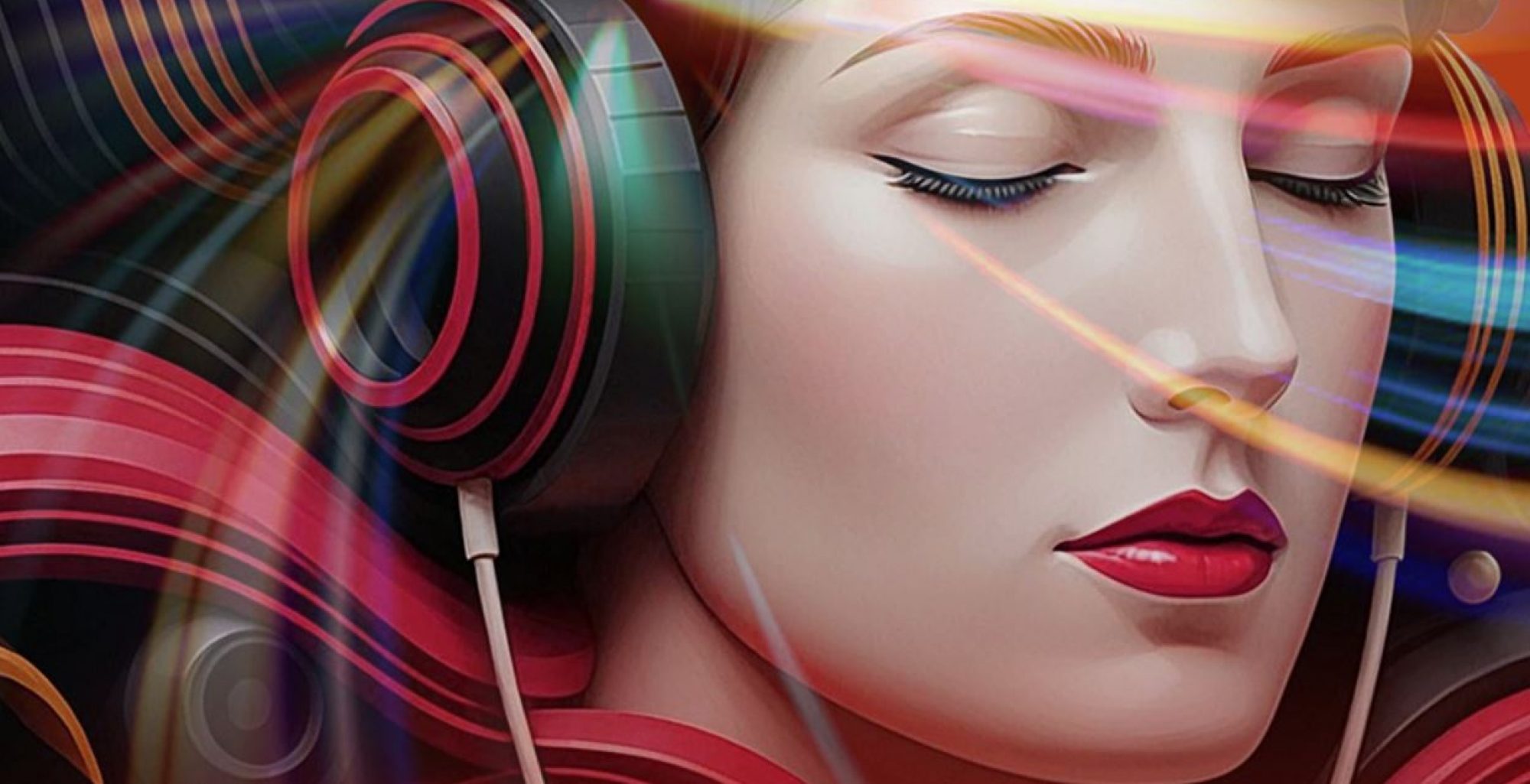

If we say that “time isn’t linear,” it means that this is a valid statement not only in the context of creativity but in general for understanding the world and the concept of time as humans. Conventional wisdom about the straight and orderly path is not only irrelevant but also the main reason to block creativity by adopting the belief that development should go straight as an arrow. Creativity is not contained in the working hours, business models, or the schedules of the organized processes. The best way to make it grow is by staying in a state of confusion, accepting unexpected connections, and going through a series of stormy ideas that seem to be disorderly. It sounds like “time isn’t linear”, and neither is creativity.
Since the early years of life through higher education, modern learning methods have been linear. Accordingly, the progress is measured through a stride from one level to the next according to the previously defined sequence of steps. This conditioning, while useful in some respects, tends to prove quite harmful to the domain of creative work. The processes of writing, painting, music composition, filmmaking, or business innovation, etc., do not follow a straight and narrow path.
Many people start to work on a project then suddenly have a feeling to throw up this work and leave it unfinished. So, why are so many creative projects abandoned midway? The creators, because of a fixed idea, can’t give full play to the creative process because they think that it must be in a logical, organized track. However, the creative process does not usually follow a neat or predictable path. Therefore, the awareness of reality is very important to understand the erratic side of creativity in life.
Ideation: Gathering Sparks of Inspiration
One of the initial things in the process of creative work of ideas often starts with ideation, this time is often the most chaotic of them all. When do ideas usually come? When do ideas usually come to us? Ideas pop up in our minds out of nowhere, after a long walk, or while doing simple and routine tasks. They are not packed neatly, and the timing of their coming is not convenient; they are spontaneous, transient, and often difficult to catch.
For any creator to be productive and efficient during the first phase of creating, he or she must capture the ideas actively. Apart from the fact that you may be a writer, artist, musician, or entrepreneur, having a method of collecting your thoughts is vital. For example, it could be a physical notebook, a digital app such as Notion, or even voice memos. The most important thing is not the medium but the dedication to the documentation process.
This stage is where the misperception of linearity tends to be an obstacle to creativity. The idea generation process that follows is indeed not something to be looked at as a predictable outcome. We must recognize that the inspiration process can be very random, allowing the production of ideas without any immediate consideration, labels, or constraints of organization.
Generation: Creating Without Constraint
After the creators have collected the ideas, the next point is how to produce something. The essence of this phase is to put as much creative effort into the work, whatever it is, as possible, without considering quality or consistency. Writers write; artists draw or paint; musicians compose; and filmmakers shoot videos. It is not a question of producing good and finished work but rather a build-up of raw material.
In comparison with the structured approach that the educational system is trying to teach, creativity can only flourish when it is not confined within borders. For instance, in writing, the main goal is to get thought s out on paper, the rest is about perfecting every sentence. The same is true of many other creative outlets.
According to quantum physics, in the same manner we get an impression of time, which is very kind of illusion, creativity is also based on the subjective view. It is not only about the project moving forward in a straight line; sometimes, it just happens to be like that. This path is not entirely paved, and there are creative or genius moments that change everything in a second.
Exploration: Piecing the Puzzle Together
One of the metaphors that are frequently used to describe the creation process is putting together a puzzle made of self-made pieces. Many times, the parts don’t join together instantly. Nonetheless, with time, copins of information begin to emerge. The shape starts to show, slowly and gradually, with the very act of creation.
Although a non-linear way may frustrate at first sight, the fact remains that it is the great protagonist of creativity. The attempt to take the linear path would be like the attempt to put together the pieces of the puzzle without understanding how they fit together.
This was the situation in the moment of location-shooting of Raiders of the Lost Ark, the film, directed by Steven Spielberg. When Harrison Ford got sick and was unable to continue the shoot as initially planned Spielberg did not block his mind by the script and thus found an unplanned, memorable moment. The scene where Ford took his gun and shot the swordsman was an example of spontaneity over linearity.
The whole process remains the same. Only parts, ideas that seem distinct or incompatible at first. The more the work continues, the more it is evident that these different pieces can be put together to get one piece as strong and meaningful.
Editing: Sculpting the Raw Material
After generating and gathering enough material, editorial work begins. That’s the moment of fine-tuning and organizing. Nevertheless, the editing phase is still not a straightforward process; it needs constant revisiting, revising, and rearranging of the material until it is molded into one harmonious whole.
The theory that “time is not linear” is very fitting for the process of editing. Ideas that were forgotten weeks, months, or even years ago can return and fix into new starts of your projects. Revising is a continuous process that has no specific end. Indeed, the artists need to get comfortable with the idea of letting go of their work when they think it is good enough.
Making the Work Visible to the Public: Publishing – Releasing Your Work to the World
The last stage of the creative process is publishing where the creator presents his/her work. For many people, this is the scariest step. It is, however, the most satisfying part as well. To take the work and put it on the market, the artist must be brave and recognize that the work is not perfect.
Creative works are rarely concluded in the usual sense. The creators often just release the works when they judge them to be good enough to be shared. This elasticity recognizes that creativity, like “time an illusion”, is not bound by fixed points.
Awakening the Non-Linearity inside Us
Being creative in a non-linear manner lets a person move into a direction where creative energy is more at its peak. It is when a person, as opposed to time, is a concept and hence can be thought and respectively acted toward when new ideas can be initiated. Contrary to the approach of forcing creativity to fit in a pre-determined box, accept the unpredictable, the chaotic, and the spontaneous as the most creative.
In the final analysis, creativity is defined not so much by the predetermined course of actions as by the freedom to make errors and develop new relationships. Since time is considered linear from a philosophical and scientific standpoint, we understand that the concept of creativity is vast and it knows no bounds.
Regardless of whether you’re a writer, guitarist, sculptor, or merchant, the primary truth of success is recognizing that creativity isn’t a straightforward process. The thing to remember on your creative path is that “time is not linear,” and your way to the final goal is also not a linear one.