
Most people believe the mind operates in only two modes: awake or asleep. In reality, human cognition exists across a wide spectrum of altered mind states that influence learning, creativity, focus, and memory. These states appear during meditation, flow, trance, visualization, daydreaming, and even moments of deep rest between sleep and awareness.
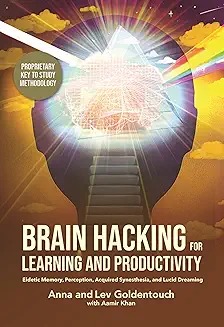
Understanding and using these states safely is a powerful skill. This article explores how altered awareness, subliminal processing, brain waves, and neural wiring shape productivity and perception. The insights presented here are drawn directly from Brain Hacking for Learning and Productivity: Eidetic Memory, Perception, Acquired Synesthesia, and Lucid Dreaming, a book that examines how the brain can be trained beyond conventional limits.
Rather than escaping reality, altered states allow the brain to reorganize itself, integrate information more efficiently, and unlock hidden cognitive resources when used with intention and balance.
Beyond Awake and Asleep: Altered Awareness Explained
Altered states of mind exist between full wakefulness and deep sleep. These states occur naturally during music immersion, meditation, rhythmic movement, illness, trance, or intense focus. Historically, such states were common across cultures, often triggered by rituals, fasting, or repetitive sensory input.
Modern neuroscience shows that altered awareness does not create a new brain. Instead, it shifts internal balances such as hormone levels, blood flow, and cognitive feedback loops. When conscious control loosens, suppressed memories, ideas, and sensory details may surface.
These states can increase creativity, insight, and learning speed. At the same time, they increase suggestibility and vulnerability, making grounding and guidance essential. Altered awareness expands perception, but it must be approached with intention rather than curiosity alone.
Myths and Realities of Trance States
Popular culture often portrays altered states as mystical transformations. The reality is more subtle. The brain remains physiologically intact, but its regulation changes. Feedback loops open, allowing new associations to form.
This openness explains why artists perceive color more vividly, musicians feel rhythm more intuitively, and thinkers recognize connections previously unseen. However, the same openness can weaken mental defenses. Suggestibility increases, and emotional boundaries soften.
The outcome depends on context. When supported by awareness and structure, altered states deepen understanding. When approached carelessly, they may destabilize perception. Balance determines whether insight or confusion emerges.
Blurred Boundaries Between Trance, Biology, and Chemistry
Altered states are not neatly categorized. Hypnosis, fever dreams, hallucinations, and chemically induced visions often overlap in experience, though their origins differ. Regulation reflects this ambiguity: drugs and hypnosis are controlled, while meditation and visualization are freely practiced.
Biological triggers such as allergic reactions or fever can also cause profound hallucinations, demonstrating how fragile the mind-body balance can be. At the same time, unregulated self-help practices allow individuals to access altered states responsibly.
This accessibility places responsibility on the individual. Altered awareness is neither inherently dangerous nor universally beneficial. Its value depends on moderation, preparation, and purpose.
Practical Uses of Altered States in Daily Life
Altered states occur naturally throughout the day. When recognized, they become tools rather than accidents.
Common, low-risk methods include:
- Conscious daydreaming during walks or showers
- Short naps between wakefulness and sleep
- Deep breathing to alter brain chemistry gently
- Music or chanting to regulate attention
- Temporary sensory reduction through silence or fasting
Used correctly, these states refresh cognition, support creative insight, and restore mental flexibility without dependency or risk.
Hypnosis, Meditation, and Sensory Loops
Hypnosis works by overloading or reducing sensory input, causing dissociation between logical processing and perception. Repetitive stimuli such as pendulums, rhythmic sounds, or visual patterns fatigue analytical loops and open space for imagination and suggestion.
Meditation achieves similar results through sensory deprivation rather than overload. When external signals diminish, internal brain resources are freed to explore unused connections. This shift is physiological, not mystical.
In both cases, closed feedback loops become open loops. This allows flexibility, experimentation, and access to suppressed cognitive material.
Intention, Guidance, and Mental Associations
Once loops open, intention determines direction. Hypnosis and visualization work by strengthening or weakening mental associations. Habits, emotional responses, and behavioral patterns are shaped through deliberate linking of sensations, memories, and meaning.
Inner role-play techniques further extend this process. The mind simulates perspectives, conflicts, and negotiations internally, allowing rehearsal and resolution without external consequences.
These practices reveal that cognition is not a single voice, but a coordinated system capable of internal dialogue and problem-solving beyond conscious rehearsal.
Anchoring Visualization and the Placebo Effect
Anchoring visualization creates deliberate associations between mental images and emotional states. Unlike hypnosis, it requires no altered trance, making it accessible for everyday use.
By pairing a current state with a desired one using imagery, ritual, or physical cues, the brain learns to transition between emotions more efficiently. This mechanism overlaps with the placebo effect, where belief and expectation alter physical outcomes.
While anchoring is powerful, it is unpredictable. It enhances preparation but cannot replace skill. Confidence amplifies ability, but without substance, it magnifies errors.
Moderation and realism prevent exaggeration and disappointment.
Flow State and Brain Waves
Flow represents the brain’s most productive state. It is the positive counterpart to stress. When the challenge is high and perceived control is present, the brain mobilizes resources without panic.
Flow involves synchronized brain waves rather than maximum activation. Alpha and theta waves combine relaxation with alertness, allowing large neural networks to integrate information efficiently.
This explains why flow enhances creativity, intuition, and problem-solving while reducing mental fatigue.
When Flow Works Best
Flow is ideal for complex, open-ended tasks such as writing, design, or problem-solving. Simple tasks benefit from speed and precision, not integration.
Multitasking disrupts flow by forcing constant rhythm shifts. Protecting uninterrupted time allows the brain to settle into the slower, integrated patterns required for deep work.
Beyond productivity, flow increases life satisfaction. It aligns skill and challenge, turning effort into engagement rather than strain.
Myelin, Learning, and Environmental Risk
Myelin is the brain’s insulation system. It allows neural signals to travel faster and with less energy. Practice strengthens myelination, reinforcing frequently used pathways.
However, myelin is vulnerable. Lead exposure disrupts its formation, particularly in children. Historical use of leaded gasoline caused widespread neurological damage, affecting learning, impulse control, and behavior across generations.
The contrast is stark: myelin accelerates cognition, while toxins silently degrade it. Learning, repetition, nutrition, and environmental awareness protect the brain’s wiring.
Subliminal Activity: The Hidden Engine of Thought
Most brain activity occurs beneath awareness. Subliminal processes combine memory, emotion, and perception continuously. Conscious thought represents only the surface.
This division aligns with two systems of thinking:
- System 1: Fast, intuitive, emotional, unconscious
- System 2: Slow, logical, deliberate, conscious
Both systems are essential. Subliminal processes generate insight, intuition, and creativity, while conscious thought evaluates and refines them.
Ignoring subliminal activity limits productivity and learning.
Subliminal Productivity in Practice
Subliminal productivity emerges when conscious control relaxes.
Key methods include:
- Productive procrastination through rest or meditation
- Automatic multitasking in mastered skills
- Sleep-based memory consolidation
- REM-based problem-solving through dreams
- Stream-of-consciousness creation
These methods allow the subconscious to process information without interference. The result is often unexpected clarity and creative resolution.
Subvocalization and Speed Reading
Subvocalization limits reading speed by tying comprehension to inner speech. Suppressing it allows visual processing to dominate.
Advanced techniques include widening the visual angle, capturing entire paragraphs at once, and eventually bypassing visualization itself. At extreme speeds, comprehension occurs without images or an internal voice.
This level of subliminal processing is mentally demanding and energy-intensive. Rest, hydration, and nutrition are essential to sustain performance.
Conclusion
Altered mind states reveal that productivity does not come solely from effort. It emerges when conscious control steps aside and deeper systems engage. Flow, subliminal activity, and neural efficiency demonstrate that the brain is adaptable, layered, and far more capable than everyday awareness suggests.
Learning to enter and exit these states intentionally expands creativity, accelerates learning, and strengthens mental resilience. Used wisely, they become tools rather than escapes.
Ready to Upgrade Your Mind and Focus?
If these ideas sparked your curiosity, you can go much deeper with Brain Hacking for Learning and Productivity: Eidetic Memory, Perception, Acquired Synesthesia, and Lucid Dreaming. This book brings all these concepts together into a clear, practical framework, showing how altered mind states, subliminal processing, and brain connectivity can be trained intentionally to improve learning, creativity, and mental performance. It is designed for curious learners who want to understand how the mind truly works and how to use it more effectively.
To turn theory into real-life results, you can also join the ProlificFocus: Wellbeing, Hobbies and Sleep-Hacking Masterclass. This course is built to help you apply these principles step by step, improving focus, sleep quality, mental clarity, and overall well-being.
Contact us directly via info@keytostudy.com and take the next step toward mastering your focus and productivity.