
Time appears stable, measurable, and external. Clocks tick forward with unwavering precision. Yet lived experience tells a different story. A few seconds of fear can feel endless, while hours of creative focus can disappear without a trace. This contradiction reveals a deeper truth: time is not only measured, but it is also experienced, and experience is shaped by awareness.
Human beings do not perceive time directly. The brain constructs it from sensation, emotion, attention, memory, and biological rhythm. What feels like duration is not the passage of seconds, but the density of awareness within those seconds.
Understanding time perception is not about escaping time or controlling it. It is about learning how awareness stretches, compresses, stabilizes, or fragments lived experience. When this understanding deepens, time becomes less of a pressure and more of a medium through which life unfolds with clarity and meaning.
Time as a Product of Awareness
Time is often described as something external, a current we move through. In reality, time is assembled internally. The brain weaves sensory input, emotion, and thought into a continuous narrative that feels like duration.
When awareness is narrow and repetitive, time collapses. When awareness is rich and detailed, time expands. This explains why childhood days feel long and adult years feel short. Novelty fills perception with markers. Routine removes them.
The clock does not change. Perception thins or thickens.
Every vivid experience adds weight to the present moment. When life becomes predictable, memory records fewer distinctions, and time compresses into sameness. This is not a failure of memory, but a consequence of reduced attention.
Emotion, Neurochemistry, and the Stretch of Moments
Time perception is not governed by a single internal clock. It is tuned by brain chemistry. Dopamine, serotonin, norepinephrine, and adrenaline adjust how quickly neurons fire and how much information is processed per second.
When emotion intensifies, the brain samples reality more rapidly. More detail is captured in the same objective interval. The outer world appears to slow because the internal sampling rate increases.
This explains:
- The slow-motion effect during danger or trauma
- The timelessness of creative flow
- The expanded moments described by athletes and performers
During boredom or fatigue, the opposite occurs. Fewer neural events are recorded. Seconds feel heavy, and time drags.
Time does not stretch or shrink. Information density does.
Flow, Learning, and the Elastic Mind
Every form of learning reshapes internal tempo. At first, learning feels slow because the brain is building new pathways. Attention must widen to capture detail. With repetition, these pathways strengthen and fuse.
As fluency develops, awareness contracts. Actions feel effortless. Subjective time compresses during performance, yet expands in richness.
This transition marks mastery.
Mastery is not speed. It is neural efficiency. Energy is no longer wasted on hesitation or correction. Movement, thought, and intention align into a single rhythm.
When learning is rushed, tension appears. When practice alternates between strain and recovery, rhythm emerges naturally. Over time, the mind becomes elastic, capable of adapting to complexity without friction.
Presence as the Discipline That Restores Time
Modern life fragments attention. Screens, alerts, and constant switching overstimulate the nervous system while underfeeding. Awareness skims surfaces too quickly to leave memory behind.
The result is time without texture.
Presence restores depth. Fully inhabiting simple acts, walking, breathing, and eating, anchors awareness in the present. When experience is fully entered, it becomes longer and more complete.
Patience arises from the same principle. The impatient mind counts minutes. The patient’s mind observes sensation. When counting stops, perception opens.
Presence can also heal distorted time. Under prolonged stress or trauma, perception fractures. Past moments intrude upon the present. Healing begins with re-anchoring awareness and reshaping emotional charge. As continuity returns, time stabilizes.
Meaning as the True Measure of Time
Time deepens through significance. We remember what matters, and memory defines lived duration. Two people may live identical years, yet experience vastly different quantities of time.
Curiosity multiplies moments. Compassion creates enduring markers. Learning enriches the inner timeline. Routine without awareness collapses it.
The aim is not to slow the clock, but to fill each interval with meaning until it feels whole.
Memory: The Architecture That Builds Time
Memory is not a warehouse of stored events. It is a dynamic structure continuously rebuilt by awareness. Each recall subtly reshapes the past.
Subjective time depends on memory density. Novel experiences create pillars that expand the inner architecture. Familiar routines generate fewer anchors, compressing time.
We live continuously, but remember discontinuously.
Beginnings, Peaks, and Endings
The brain prioritizes memory around three points:
- Beginnings, which establish orientation
- Peaks, which imprint emotion
- Endings, which seal meaning
This selective process is efficient but misleading. Large portions of ordinary time vanish from memory. As life becomes familiar, fewer memory anchors form, and time accelerates in hindsight.
Deliberately introducing variation, reflection, and attention restores richness by creating new beginnings and endings within everyday life.
Emotional Weight and Flashbulb Memory
Emotion sharpens perception. During intense events, the amygdala signals the hippocampus to preserve detail with exceptional clarity. These flashbulb memories can inspire or haunt.
Trauma freezes time by replaying emotion without resolution. Healing requires re-encoding, revisiting memory safely, and aligning emotional tone with the present.
Positive emotional memories expand time by reinforcing meaning. They become lasting sources of motivation and identity.
Perception Filters and Personal Time
People remember different aspects of experience because attention values differ. Some remember patterns, others sensations, rhythms, faces, or abstractions.
These filters shape memory architecture and, by extension, time perception. Novelty breaks patterns and slows time. Predictability dulls perception and accelerates it.
Flexible attention keeps time open. Rigid templates compress it.
Aging, Patience, and the Shift to Depth
Aging does not simply slow the mind. It changes its rhythm. Youth live in urgency and discovery. Age lives in resonance and recognition.
The Greek distinction between Chronos (measured time) and Kairos (lived time) becomes clear. With experience, the mind values timing over speed.
Forgetting becomes selective. Details fade, but essence remains. Emotional truths strengthen. Pain softens. The mind grows lighter, not emptier.
Slowness becomes refinement rather than decline. In this rhythm, fear of aging dissolves, and time becomes a partner rather than a threat.
Speed, Rhythm, and Overlearning
True speed arises from rhythm, not force. Every system in the body follows hidden timing. When awareness aligns with these rhythms, movement becomes effortless.
Overlearning transforms conscious effort into embodied instinct. Neural pathways insulate through repetition. Prediction replaces reaction.
At mastery, perception expands while action accelerates. A fraction of a second feels wide enough for a decision. This is not an illusion, but predictive flow.
At the highest level, speed and stillness meet. The faster the action, the calmer the center.
Chronobiology: The Body as a Living Clock
The body contains countless clocks. Organs, hormones, and neural systems follow cycles tied to light, darkness, and planetary rhythm.
Light instructs alertness. Darkness restores. When these cycles are ignored, fatigue and anxiety arise. When honored, memory sharpens and time feels abundant.
We do not move through time. Time moves through biology.
When daily life aligns with these rhythms, consistent sleep, rhythmic meals, and natural light exposure, awareness stabilizes, and perception expands.
The Supersense of Time
When awareness synchronizes with biological rhythm, an intuitive sense of timing emerges. This supersense guides when to act, pause, wait, or stop, without measurement.
This sensitivity develops through consistent observation, patience, and respect for subtle cues. Ordinary moments gain depth. Decisions align naturally with circumstances.
Life becomes a dialogue with time, not a struggle against it.
Conclusion: Living Awake Inside Time
Time is not a straight line but a living field shaped by attention, memory, rhythm, and meaning. When awareness aligns with the body’s natural cycles, moments stretch, days deepen, and years gain weight without heaviness.
Mastery of time is not control. It is present.
Explore These Ideas in Depth, Book Recommendation
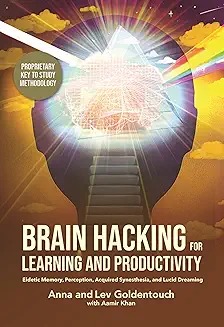
Brain Hacking for Learning and Productivity: Eidetic Memory, Perception, Acquired Synesthesia, and Lucid Dreaming explores time perception, memory architecture, awareness training, and cognitive mastery in depth. The book provides a complete framework for understanding how perception shapes learning, productivity, and lived experience from the inside out.
Deepen the Practice, Course Invitation
The ProlificFocus: Wellbeing, Hobbies and Sleep-Hacking Masterclass translates these principles into practical systems for focus, rest, rhythm alignment, and sustainable performance. It is designed for those who want to move beyond understanding and begin living in harmony with their internal clocks.
To access the course, contact us directly via email: info@keytostudy.com
Reach out and take the next step toward mastering awareness, rhythm, and the supersense of time.