
Modern productivity is not threatened by lack of effort but by constant disruption. Interruptions, memory overload, and scattered attention silently erode performance across professional and personal life.
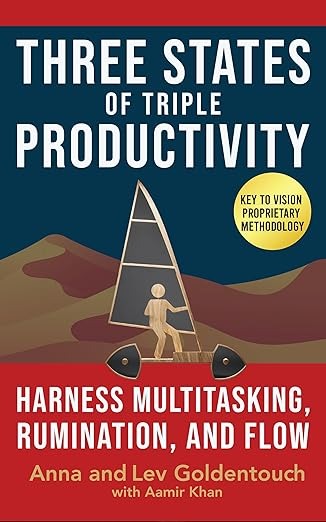
These challenges are addressed systematically in THREE STATES OF TRIPLE PRODUCTIVITY: Harness Multitasking, Rumination and Flow, which reframes multitasking as a controlled system rather than chaotic behavior. Instead of resisting interruptions and limitations, the book explains how to manage them intelligently.
This article explores three critical foundations of sustainable productivity: handling interruptions, understanding working memory limits, and applying visualization techniques to improve multitasking control. By mastering these areas, professionals can enhance focus, reduce stress, and consistently produce high-quality results even under pressure.
Handling Interrupts as a Core Productivity Skill
Interruptions are unavoidable in modern life. The problem is not their existence but how they are handled.
In early computing, interrupt mechanisms were developed to allow systems to respond to external events without collapsing. These mechanisms introduced prioritization, queueing, and masking to preserve system stability. Humans can adopt the same mindset: treating tasks and interruptions systematically rather than emotionally.
Effective interrupt management is not just about stopping one task and starting another. It requires evaluating the priority, impact, and context of each interruption before acting. Over time, this builds a structured approach to multitasking that minimizes cognitive strain.
Priority Interrupts and Safety First
Some interruptions demand immediate attention. Safety-related events override all other tasks.
In computing, emergency interrupts stop everything else. In daily life, health emergencies or critical failures function the same way. Productivity systems must explicitly recognize these priority interrupts instead of treating all disruptions equally.
By categorizing interruptions into “priority” and “non-priority,” we ensure that critical tasks or urgent decisions are never compromised. This mental model is especially useful for high-stakes professions such as medicine, engineering, or legal work, where ignoring a priority interruption can have serious consequences.
High-Urgency but Deferred Interrupts
Not all urgent events require immediate execution. Some need acknowledgment but not full engagement.
This mirrors how computers collect interrupts in queues. Humans can apply the same principle by responding briefly and deferring full action. For example, a quick SMS like “I’m in a meeting, will call you later” acknowledges the event while preserving mental focus.
Maintaining such a “priority queue” of non-critical tasks allows better scheduling and prevents reactive multitasking, which is known to reduce accuracy and increase stress.
Context Switching and Task Rollback
Some interruptions are simple and require minimal effort. Others are complex and demand a full mental shift.
When an interruption requires deep engagement, the current task should either be completed or rolled back to a stable state. Continuing both simultaneously degrades performance. Treating tasks as transactional units enables cleaner transitions, reducing cognitive load and mental errors.
This strategy also allows professionals to plan rollback procedures. For example, saving partial work, writing quick notes, or setting reminders ensures that no critical details are lost during interruptions.
Balancing Work and Personal Interests
Interruptions often cross boundaries between work and personal life. This makes rollback strategies essential.
Simple preparation steps can preserve task integrity when attention must shift suddenly. Writing brief state notes or shutting down unattended processes reduces damage. Smart home tools, timers, and digital reminders can complement human judgment, allowing seamless integration between work responsibilities and personal commitments.
Such proactive planning is especially useful in hybrid work environments where personal and professional boundaries overlap constantly.
The Transactional Approach to Productivity
Every task can be viewed as a transaction with a clear start and end.
When interrupted, the decision becomes simple: complete the transaction, roll it back, or queue it for later. This framework restores control during high-pressure situations and prevents reactive decision-making.
By thinking of work in transactions, professionals develop a structured mental system that improves efficiency, reduces stress, and minimizes the feeling of chaos that comes with constant interruptions.
Interrupts in Multitasking Pipelines
When tasks are arranged in pipelines, interruptions become more expensive.
Stopping one step may require restarting the entire sequence. However, this is still preferable to breaking a flow state irreversibly. This is why multitasking allows interruptions, while deep flow states should actively avoid them.
Professionals can mitigate pipeline interruptions by predefining “save points” or checkpoints within ongoing tasks. These micro-strategies reduce recovery time and maintain work quality.
Working Memory as the Hidden Bottleneck
Working memory is the mental workspace where information is held temporarily.
Research shows that this workspace has strict capacity limits. Exceeding them slows thinking and increases errors. Multitasking often fails not because tasks are difficult, but because working memory is overloaded.
Optimizing working memory involves both mental strategies and external tools. By selectively storing, grouping, or offloading information, we can preserve mental capacity for decision-making and problem-solving.
The Reality of the 7±2 Rule
Early research suggested working memory could hold about seven items. While modern findings are more nuanced, the limitation remains real.
Adding more items reduces processing speed. Pushing further leads to a breakdown. Recognizing this limit allows professionals to design task loads intelligently, avoiding excessive simultaneous demands on cognitive resources.
Capacity, Speed, and Cognitive Performance
Working memory capacity and access speed strongly correlate with reasoning ability.
Splitting attention fragments this workspace, reducing both capacity and speed. Performance temporarily declines as a result. Conversely, externalizing information preserves working memory efficiency and enables more accurate, faster decisions under pressure.
Chunking and Offloading Information
Chunking groups related information into manageable units.
Offloading stores information externally using notes, diagrams, or digital tools. This frees cognitive space for decision-making. Together, these techniques allow complex tasks to remain manageable without overload. Professionals can also pre-plan “information packages” to access quickly, improving workflow efficiency.
Split Focus vs Context Switching
Split focus and context switching are not the same.
Split focus involves monitoring multiple streams within one mental frame. Context switching requires abandoning one frame and rebuilding another. The latter is significantly more expensive and should be minimized whenever possible. Understanding this difference empowers individuals to structure their workflow around manageable multitasking rather than forced switching.
Why Context Switching Breaks Flow
Flow and creative rumination tolerate split focus but collapse under frequent context switches.
Only highly specialized roles can sustain rapid switching reliably. For most people, it reduces accuracy and satisfaction. Minimizing unnecessary context switching preserves both productivity and mental energy, allowing deeper focus and more consistent output.
Multitasking and ADHD
ADHD is often associated with spontaneous attention shifts.
However, split-focus multitasking can trigger hyperfocus, a state closely related to flow. This can temporarily reduce ADHD-related difficulties. Structured tasks, gamified activities, and stimulating multitasking environments can enhance engagement while maintaining cognitive control.
Visualization as a Multitasking Tool
Visualization improves multitasking at a tactical level.
Instead of holding tasks verbally, activities are represented visually. This reduces working memory load, helps track progress, anticipate interruptions, and plan rollbacks. Visualization has been used historically in memory systems, athletics, and modern performance training for decades.
Tactical Visualization for Parallel Tasks
Each task is associated with a visual marker or icon.
Progress is tracked using mental completion bars. Rollback scenarios are planned visually. This approach supports parallel awareness without constant context switching, making complex work manageable and reducing mental errors.
Color-Based Visualization Techniques
Colors can be assigned to tasks or categories.
Aggregating numerical or progress data by color trains split-focus attention. This method is highly parallel and does not overload working memory. Over time, this training enhances cognitive flexibility and mental clarity.
Split-Focus Visualization Training
Split-focus visualization places multiple task representations in peripheral mental space.
This allows rapid switching without rebuilding context. Many digital interfaces already support this visually. With practice, this skill becomes internalized and device-independent. Gamifying exercises, such as card color summation or juggling balls, further strengthens both working memory and visualization ability.
Visualization Across Complex Professions
Visualization supports high-performance multitasking in finance, research, medicine, and programming.
Dashboards, timelines, mental maps, and color-coding reduce ambiguity and accelerate decision-making under pressure. The common benefit is clarity without overload, enabling professionals to maintain accuracy, speed, and control in highly demanding environments.
Practical Visualization Guidelines
Effective visualization training follows clear principles:
- Start with simple representations
- Use colors and icons consistently
- Practice split-focus deliberately
- Gamify training where possible
- Practice regularly
- Seek expert guidance to improve efficiency
Consistency in practice is the key to transforming visualization from a cognitive exercise into a reliable productivity tool.
Conclusion: Control Attention, Don’t Fight It
Productivity improves when attention is managed systematically. Interrupts require prioritization. Working memory requires protection. Visualization provides leverage.
Unlock Peak Productivity with ProlificFocus: Master Multitasking, Flow, and Time Management
Discover the transformative principles behind THREE STATES OF TRIPLE PRODUCTIVITY: Harness Multitasking, Rumination and Flow, where productivity isn’t about motivation; it’s an engineered system you can control. Learn how to structure your work, optimize focus, and tackle tasks with precision and efficiency.
Take the next step and apply these strategies in real life with ProlificFocus: Productivity Masterclass (Time Management, Multitasking and Flow), enabling you to build a sustainable, high-performance productivity system.
📩 Contact us today at info@keytostudy.com to claim exclusive course discounts and start transforming the way you work, master focus, minimize distractions, and achieve consistent results every day.