
Productivity is often misunderstood as speed, volume, or relentless output. In reality, sustainable productivity emerges from quality, clarity, and alignment. When work is rushed, poorly understood, or fragmented by conflicting decisions, waste multiplies, regardless of effort.
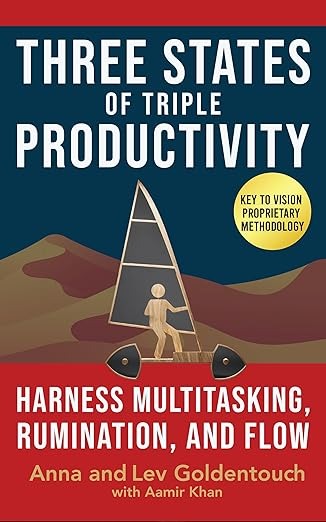
This deeper perspective is explored throughout the book THREE STATES OF TRIPLE PRODUCTIVITY: Harness Multitasking, Rumination and Flow, which reframes productivity as the disciplined elimination of waste while protecting focus, meaning, and long-term performance.
The following article examines three powerful frameworks, Six Sigma, Root Cause Analysis, and Wide Consensus, that work together to reduce defects, prevent recurring problems, and align people behind shared goals. Together, they offer a practical philosophy for achieving productive clarity without burnout.
Six Sigma: Redefining Quality Standards
How Good Is “Good Enough”?
Six Sigma challenges conventional ideas of acceptable quality. Rather than tolerating frequent errors, it sets a benchmark so high that defects become statistically rare, approximately 3.4 defects per million opportunities. While perfection remains theoretical, the discipline required to approach it transforms how systems are designed and managed.
Originally introduced by Motorola in the 1980s, Six Sigma drew inspiration from Japanese manufacturing practices and emphasized measurement, control, and prevention. Practitioners were trained as “belts,” reflecting the methodology’s structured, skill-based approach.
The Six Sigma Mindset: Quality at Every Step
At its core, Six Sigma is not merely a quality control system; it is a waste-elimination philosophy. Waste does not only appear in faulty outcomes; it accumulates quietly during poorly designed processes.
Six Sigma shifts attention upstream, ensuring quality is embedded into every step rather than inspected at the end. This approach replaces correction with prevention and emphasizes consistency, predictability, and clarity.
Research supports this mindset. Organizations with strong Six Sigma programs consistently report significant reductions in rework and inefficiency, even when absolute perfection is not achieved.
Automation and Measurement: Why Precision Matters
In complex systems, especially those with many interdependent steps, even small deviations can cascade into large failures. Six Sigma relies heavily on automated testing, standardized checks, and real-time measurement to prevent errors from progressing unnoticed.
Automation excels where repetition and consistency are required. Humans, meanwhile, bring judgment, creativity, and adaptability. When combined thoughtfully, automation protects quality while freeing human attention for higher-level problem-solving.
Can Humans Reach Six Sigma Levels?
Humans are not machines, and expecting flawless performance under all conditions is unrealistic. Fatigue, pressure, and complexity introduce variability, even among experts. This is not a flaw, but a limitation that must be acknowledged.
Rather than forcing human work into impossible standards, Six Sigma encourages a partnership between humans and systems. Automation handles repetition; humans provide insight, direction, and innovation. Productivity improves when each operates within its strengths.
Practical Six Sigma Tools for Everyday Work
Six Sigma is powerful because it translates philosophy into action through clear tools:
- DMAIC (Define, Measure, Analyze, Improve, Control)
A structured method for improving any process. - 5 Whys
A technique for uncovering root causes rather than treating symptoms. - Pareto Analysis
Identifying the small number of factors responsible for most problems. - Kaizen
Continuous, incremental improvement rather than dramatic overhauls.
These tools are as effective in knowledge work and personal systems as they are in manufacturing.
Root Cause Analysis: Solving the Right Problem
Why Symptoms Keep Returning
Fixing symptoms feels productive, but it rarely creates lasting improvement. Root Cause Analysis (RCA) focuses on why a problem exists, not just how it appears.
This approach has roots in engineering, statistics, and quality management, including the Pareto principle and the Toyota Production System. It emphasizes prevention over reaction and learning over blame.
RCA recognizes a critical truth: If the root cause remains, the problem will return.
The Five Steps of Root Cause Analysis
Effective RCA follows a disciplined process:
1. Define the Problem
Clarify what is happening, what should be happening, and why the gap matters.
2. Collect Data
Verify the problem exists, understand its scope, and assess its impact.
3. Identify Causal Factors
Map the sequence of events and conditions that made the problem possible.
4. Identify Root Causes
Dig deeper until the true origin of the issue is revealed.
5. Implement Preventive Solutions
Design solutions that eliminate recurrence, not just symptoms. This process transforms problem-solving from reactive firefighting into strategic improvement.
Prioritization: Applying Root Cause Thinking to Life
Root cause thinking applies beyond technical systems. In daily work and learning, a small number of activities typically generate the most meaningful results.
By analyzing which actions produce value and which quietly drain time and energy, it becomes possible to prune low-yield activities and invest attention where it matters most. Productivity improves not by doing more, but by doing less of the wrong things.
The Human Side of Waste
Waste is not purely mechanical. Psychological factors often sustain inefficiency:
- Cognitive biases distort judgment and reinforce poor decisions.
- Procrastination hides deeper issues like fear, perfectionism, or lack of clarity.
- Low engagement reduces initiative and accountability.
Root cause analysis addresses these forces by encouraging reflection, evidence-based thinking, and continuous adjustment.
Wide Consensus: Eliminating Waste Through Alignment
Why Decisions Fail Without Commitment
Even the best systems fail when people pull in different directions. Wide Consensus is a Japanese decision-making philosophy that emphasizes alignment, ownership, and shared responsibility.
It does not require unanimous agreement or suppress disagreement. Instead, it ensures that once a decision is made, all stakeholders are fully committed to execution.
Historical Roots of Wide Consensus
A wide consensus evolved through Japan’s social and economic history:
- Post-war reconstruction emphasized cooperation and cohesion.
- Confucian and Buddhist traditions reinforced collective responsibility.
- Interconnected business networks encouraged long-term alignment.
These influences shaped a model where debate is encouraged, but fragmentation is minimized.
Diversity Without Fragmentation
Wide Consensus values diverse perspectives while avoiding paralysis. Innovation depends on disagreement, but execution requires unity.
Modern environments, especially digital ones, often trap individuals in ideological or informational “filter bubbles.” Wide Consensus counters this by encouraging open dialogue, evidence-based discussion, and deliberate convergence.
Stages of Building Wide Consensus
Effective consensus-building follows a structured path:
Vision Alignment
Leaders articulate a clear purpose linked to organizational goals.
Stakeholder Engagement
All relevant voices are invited into the conversation.
Data-Driven Analysis
Decisions are grounded in evidence, not opinion.
Collaborative Problem-Solving
Teams generate solutions collectively, increasing ownership.
Iterative Feedback
Strategies evolve through reflection and adaptation.
Celebration of Progress
Recognizing milestones sustains momentum and morale.
Together, these stages transform decisions into commitments.
Technology, Sustainability, and Continuous Improvement
Modern tools enhance consensus by increasing transparency and visibility. Data analytics, automation, and communication platforms reduce friction and reveal inefficiencies.
At the same time, waste elimination increasingly aligns with sustainability goals. Reducing waste conserves resources, lowers costs, and strengthens long-term resilience.
Conclusion: Precision, Insight, and Alignment
- Six Sigma refines quality.
- Root Cause Analysis prevents recurrence.
- Wide Consensus aligns people behind meaningful action.
Together, they form a coherent productivity philosophy, one that replaces urgency with clarity and effort with effectiveness.
Elevate Your Productivity With ProlificFocus
These principles are explored in depth in the book THREE STATES OF TRIPLE PRODUCTIVITY: Harness Multitasking, Rumination and Flow, which connects precision, reflection, and flow into a unified framework for modern work and learning.
Take your skills further with the ProlificFocus: Productivity Masterclass (Time Management, Multitasking and Flow), designed to translate these insights into practical systems you can implement immediately.
📩 Contact us at info@keytostudy.com to receive exclusive course discounts and start building a smarter, more efficient productivity system today.