
Most productivity advice assumes ideal conditions: long stretches of focus, perfect energy levels, and uninterrupted schedules. Real life rarely cooperates. Meetings interrupt momentum, energy fluctuates, and much of the day is spent transitioning rather than executing. This is where buffers and time fillers become essential.
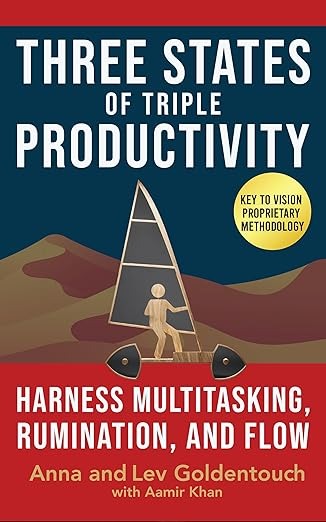
In THREE STATES OF TRIPLE PRODUCTIVITY: Harness Multitasking, Rumination and Flow, I explain why productivity is not only about peak performance but also about what happens between peaks. We focus on buffers, the shock absorbers of daily life, and how planning and intentional time filling allow progress even when conditions are not ideal.
Most Tasks Are Not Optimized, and That Is Normal
The pursuit of maximum productivity has existed for centuries, from philosophical reflections on focus to modern techniques such as time boxing and interval work. Yet most tasks do not fit neatly into high-performance modes. Creative work, coordination, maintenance, learning, and recovery often occur outside moments of intense focus.
The Spectrum of Productive States
Throughout this framework, three highly productive states define how work gets done:
- Flow, the state of deep focus and effortless execution
- Rumination is a slower, incubating mode where ideas mature through reflection
- Multitasking, effective handling of routine or well-practiced activities
These states are powerful but resource-intensive. They require time, attention, and energy that are not always available. In addition, transitions into and out of peak states require recovery. Hydration, stress reduction, and context switching are not inefficiencies. They are necessities.
Why Suboptimal Phases Matter
Many essential tasks are better suited for lower-intensity moments. Tool maintenance, documentation, meetings, social interaction, learning, and strategy often happen when flow is unavailable. Attempting to force optimization in these moments increases stress without improving outcomes.
Daily work often unfolds as a sequence of partial focus, interruptions, and waiting periods. Progress accumulates through small advances rather than uninterrupted brilliance. Recognizing this reality prevents frustration and allows productive use of otherwise overlooked time.
Buffers as Shock Absorbers in Everyday Life
Buffers are periods of flexibility that absorb unpredictability. Just as buffers between train wagons prevent damage during sudden movement, buffers in life prevent burnout and breakdown when demands collide.
The Buffering Nature of a Normal Week
A balanced life is rarely optimized end-to-end. Instead, effort is distributed unevenly across days. Some days demand intensity, others allow recovery or support for different priorities. This structure creates resilience.
Workdays may alternate between high-output periods and supportive or recuperative roles. Weekends often act as extended buffers, enabling rest, family engagement, or reflective rumination on personal projects. Even when weekends include thinking or planning, they can be repurposed when personal needs arise.
Buffers allow life to remain functional under pressure without requiring constant recalibration.
Time Gaps Are Not Wasted Time
Buffers also appear inside productive states themselves:
- Multitasking includes waiting periods for external processes to complete
- Rumination includes idle moments where ideas slowly surface
- Flow is often followed by an energy drop that requires rest
These gaps are inherently recreational. Treating them as failures of discipline misses their value. Used intentionally, they restore mental resources and prevent fatigue from accumulating.
Planning Everything Without Overplanning
Planning is often misunderstood as rigid scheduling. In practice, effective planning provides direction while leaving room for adaptation.
The Weekly Rhythm of Planning
Daily schedules change too quickly to serve as stable planning units. Weekly cycles offer a more reliable structure because many obligations repeat weekly. A simple list of work tasks and recreational intentions is often sufficient.
Creative effort in planning typically happens once. The structure can then be reused and adjusted incrementally. This approach reduces decision fatigue and aligns effort with predictable rhythms such as weekends and recurring commitments.
Research consistently shows that people who plan experience lower stress and higher productivity than those who rely on improvisation alone.
From Goals to Granular Tasks
Planning begins with defining long-term and short-term objectives. Large goals are then divided into smaller, manageable tasks. As new information arrives, plans are reshuffled. Changes are usually incremental rather than radical.
Urgent and important tasks receive deeper attention, while less critical tasks are deferred without guilt. This dynamic prioritization keeps effort aligned with reality instead of idealized schedules.
Extending Planning Beyond Work
Planning often stops at professional tasks, leaving leisure time to default behaviors such as social media scrolling or random content consumption. Without intention, recreation becomes suboptimal.
Applying light planning to leisure enables better outcomes:
- Reconnecting with specific people instead of passive browsing
- Learning topics of genuine interest rather than consuming random news
- Using walks and downtime for reflective rumination on complex challenges
Recreation does not need rigid scheduling. Even a mental shortlist of desired experiences can guide better choices.
Planning Maintenance and Recovery
Maintenance is often excluded from productivity systems, yet it determines sustainability.
Short daily rest periods, eye closure, or naps can be planned intentionally. Waiting times during work can be repurposed for listening to complex music, taking brief breaks, or gentle recovery. Once tested, these routines become automatic and require little effort.
Maintenance is not a distraction from productivity. It is a prerequisite for it.
Fun Can Have Clear Objectives
Fun is often assumed to be aimless, but it usually serves implicit goals:
- Maintaining relationships
- Learning new subjects
- Providing physical recovery or stimulation
- Exploring seasonal or evolving interests
Interests shift gradually week to week and more noticeably across seasons. Planning desired experiences at a high level allows flexible selection of activities later. This plan does not need to be written. Visualization alone can guide choices.
When fun aligns with underlying objectives, it becomes restorative rather than draining.
Daydreaming and Tableshifting as Time Fillers
Time buffers appear unexpectedly between tasks, appointments, or commitments. Two strategies help fill them intentionally: daydreaming and tableshifting.
Daydreaming as Directed Imagination
Daydreaming occurs naturally during automatic activities such as preparing food or commuting. When guided by values and interests, it becomes productive.
Daydreaming often starts with a broad interest and moves toward imagining specific experiences. These imagined experiences later find a place in routines or plans. Research suggests that this form of mental wandering strengthens learning and memory by connecting different brain regions.
Daydreaming is not an idle distraction. It is a preparatory phase for future action.
Tableshifting as Dynamic Prioritization
Tableshifting involves temporarily raising the priority of small or appealing tasks when a buffer appears. Reading an article already on a list, reviewing notes, or handling minor tasks fits naturally into short gaps.
Once a task’s priority is adjusted, the rest of the task list shifts automatically. This makes progress without heavy decision-making. Studies show that engaging in micro-tasks during downtime improves both productivity and well-being.
Optimizing Buffers Without Forcing Them
When no urgent action is required, buffers can be filled with low-pressure activities that still matter:
- Walking in natural environments
- Reading or writing short texts
- Calling friends
- Completing delayed errands
- Listening to music or resting the eyes
These actions are rarely urgent or critical, yet they deserve space in daily life. Over time, they accumulate into meaningful progress and well-being.
Practical Guidelines for Using Buffers Effectively
- Accept that not all tasks will occur in peak states
- Use weekly planning as a stable framework
- Plan maintenance and recovery intentionally
- Treat leisure as a meaningful category, not an afterthought
- Use daydreaming to explore values and future experiences
- Use tableshifting to capture micro-opportunities for progress
Small, consistent actions inside buffers often matter more than rare bursts of intensity.
Conclusion
Productivity is not about eliminating inefficiency. It is about working with the natural structure of life. Buffers absorb shocks, planning provides orientation, and intentional time filling turns gaps into assets.
By recognizing unoptimized tasks as normal, planning with flexibility, and using daydreaming and tableshifting wisely, productivity becomes sustainable rather than exhausting. This approach does not demand constant discipline. It builds resilience.
These ideas are explored in depth in THREE STATES OF TRIPLE PRODUCTIVITY: Harness Multitasking, Rumination and Flow, where productivity is framed as a system of states rather than a single mode of effort. If you want to apply these principles in a structured way, the ProlificFocus: Productivity Masterclass (Time Management, Multitasking and Flow) translates them into practical frameworks designed for modern life.
To receive information about course discounts or learn more, contact me at info@keytostudy.com and take the next step toward a more resilient and realistic productivity system.