
Productivity is often measured by speed, volume, or visible effort. However, the most meaningful output rarely comes from rushing or constant activity. Instead, it emerges from deep engagement, controlled focus, emotional regulation, and a refined perception of time.
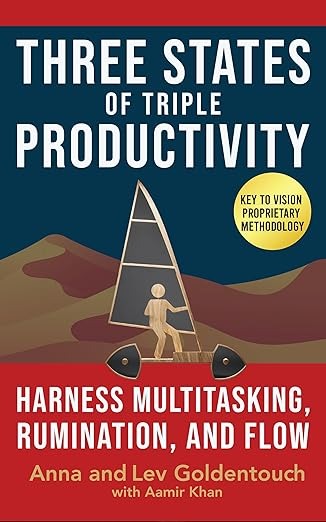
These principles are explored in depth in the book THREE STATES OF TRIPLE PRODUCTIVITY: Harness Multitasking, Rumination and Flow, which challenges conventional productivity myths and introduces a more human-centered, sustainable framework for high performance.
This article examines the final four pillars of this framework: the flow state, the difference between presence and focus, the danger of operating at full gas in neutral, and the way time perception changes across life and work.
Achieving Exceptional Output Through the Flow State
What the Flow State Really Is
The flow state is a mental condition marked by deep immersion, heightened clarity, and optimal performance. First described in the 1970s by psychologist Mihaly Csikszentmihalyi, flow occurs when skill level and task complexity are perfectly aligned.
In this state, individuals lose awareness of time, distractions fade, and productivity increases dramatically. Long-term research indicates that flow can produce up to five times higher productivity, especially in complex or creative tasks.
Flow is not about effort alone. It is about precision, challenge, and alignment. When work is structured correctly, flow becomes repeatable rather than accidental. This idea aligns with designing work environments and routines that support deep engagement, similar to how focus and flow are cultivated through intentional attention management.
Why Flow Feels Faster Than Time
Time perception is subjective. During flow, hours can feel like minutes because attention is fully absorbed. This altered perception allows individuals to accomplish in one session what might otherwise take days.
Flow compresses time not by rushing tasks, but by eliminating friction, hesitation, and mental noise. The result is faster execution paired with higher quality.
Professions That Naturally Support Flow
Certain professions are more likely to induce flow, particularly those involving creativity, problem-solving, or structured complexity. Programming, design, research, engineering, and the arts are common examples.
However, flow has strict requirements:
- Tasks must be challenging but achievable
- Duration must be neither too short nor excessively long
- Preparation must be thorough
- Post-flow refinement is often necessary
Flow creates momentum, but finishing details typically requires additional processing.
Eliminating Distractions to Enter Flow
Flow demands total focus. Interruptions disrupt momentum and break immersion. This is why flow often occurs early in the morning, late at night, or during isolated periods such as weekends.
Key strategies include:
- Turning off communication channels
- Working in uninterrupted environments
- Scheduling deep work blocks
- Minimizing digital noise
Learning how to reduce interruptions and train sustained attention is central to entering flow consistently, especially when applying principles such as how to focus while studying to professional and creative work.
Flow, Stress, and the Feeling of Control
The difference between productive flow and negative stress lies in control. Flow requires confidence, preparation, and readiness for unexpected events.
When individuals feel capable of handling uncertainty, stress transforms into focus. Without control, stress becomes overwhelming and counterproductive.
Flow is energy-intensive and cannot be sustained indefinitely. Entering flow requires adequate rest, recovery, and mental readiness. Strategic use of nutrition, hydration, and mild stimulants may support flow entry, but energy management remains essential.
Practical Guidelines for Entering Flow
- Choose tasks that stretch skills without overwhelming
- Remove all non-essential distractions
- Use pre-flow rituals to prime focus
- Timebox flow sessions
- Plan post-flow cleanup work
- Maintain physical energy and hydration
- Prioritize rest and recovery
Flow is powerful, but it is situational. When conditions align, it should be used deliberately.
Presence Is Not the Same as Focus
Why Being Present Is Not Enough
Presence is often confused with productivity. Being physically present does not guarantee meaningful engagement. Presence often relates to empathy or awareness, while productivity depends on structured attention.
To work effectively, attention must be organized into primary focus, secondary focus, and controlled context switching.
Primary Focus: Where Resources Matter Most
The primary focus is the task that receives the brain’s best cognitive resources. It is where mistakes carry the highest cost and outcomes matter most.
Loss of primary focus leads to inefficiency and risk. Attention drift during critical tasks can have serious consequences. Not everyone can control focus perfectly, but understanding its hierarchy is essential.
Secondary Focus: Supporting Without Distracting
Secondary focus involves background awareness. It allows monitoring time, progress, or related tasks without pulling resources away from the main objective.
Effective secondary focus supports productivity rather than competing with it. It operates quietly, keeping systems running while attention remains anchored to what matters most.
Context Switching: The Hidden Productivity Drain
Context switching occurs when attention jumps between unrelated tasks. While sometimes unavoidable, excessive context switching disrupts mental continuity and increases cognitive load.
Reducing unnecessary switching is essential for sustainable output and is closely related to understanding the productivity paradox, where doing less, but with greater clarity, often leads to better results. This principle is explored further in The Productivity Paradox.
Defining Time Well Spent
Time well spent is not defined by intensity alone. It comes from:
- Strong primary focus on what matters most
- Secondary awareness of surroundings and constraints
- Minimal context switching
This mode of productivity is sustainable across energy levels. It may not match the speed of flow or the efficiency of planned multitasking, but it consistently produces value.
Avoiding the Trap of “Full Gas in Neutral”
What “Full Gas in Neutral” Means
“Full gas in neutral” describes a highly activated but unproductive state. Resources are fully mobilized, yet no meaningful progress occurs.
This state often appears during emotional stress, unresolved uncertainty, or situations beyond personal control. Unlike healthy procrastination, which can include planning or recovery, full gas in neutral is mentally exhausting and destructive.
Mindfulness as a Reset Mechanism
One of the most effective responses to this state is mindfulness. Rather than forcing productivity, attention is redirected toward the present moment.
Mindfulness does not eliminate problems, but it prevents wasted energy and reduces emotional overload.
Sensory Focus and Internal Attention
Shifting attention to sensory input helps ground the mind. Simple actions like controlled breathing, listening, or focusing on physical sensations can stabilize mental states.
Productivity is a tool, not the ultimate goal. When productive output is impossible, reconnecting with experience itself preserves energy and well-being.
Creative Escapism as Resource Redirection
Another strategy is creative escapism. When mental energy cannot be applied directly to a problem, channeling it into creative or intellectual exploration can restore balance.
Creative escapism uses already-mobilized resources constructively rather than letting them decay into stress or anxiety.
Using Resources Wisely Over Time
Those who consistently waste mental energy often feel chronically short on time. Those who manage resources intentionally can sustain productivity across decades.
The goal is not intensity alone, but longevity and intelligent allocation of effort.
Short Days and Long Years: Understanding Time Perception
Why Meaningful Events Stretch Time
Time perception depends on memory density. Years filled with meaningful events feel longer in retrospect, even though individual days feel short.
Routine compresses time. Novelty expands it.
Meaningful work demands preparation and follow-up, making days feel packed while enriching long-term memory.
The Productivity-Time Tradeoff
The desire for more hours often ignores the cost. Longer days may come with reduced energy and a slower pace.
Time perception varies with age, personality, and culture. Younger individuals often experience time passing faster, while older individuals perceive longer days but shorter years.
Productivity Across Decades, Not Days
As patience increases with age, productivity should be measured over longer horizons. Daily output becomes less important than sustained contribution.
Small daily wins fade in memory. Long-term achievements endure.
Aging, Energy, and the Time Paradox
Aging often brings reduced sleep and more waking hours, but also less energy. More time does not automatically mean higher productivity.
Balancing time availability with energy and focus becomes increasingly important for maintaining quality output.
Conclusion: Designing Productivity for a Lifetime
True productivity is not about constant acceleration. It is about choosing the right state at the right time, managing attention wisely, avoiding destructive mental loops, and respecting how time perception evolves.
Go Deeper: Build Sustainable High Performance
Unlock the Full Productivity Framework
These concepts are explored in full detail in the book THREE STATES OF TRIPLE PRODUCTIVITY: Harness Multitasking, Rumination and Flow, designed for those seeking meaningful output without burnout.
Apply the System with Expert Guidance
For structured implementation, the ProlificFocus: Productivity Masterclass (Time Management, Multitasking and Flow) provides practical tools, frameworks, and training to turn insight into action.
📩 Contact for exclusive course discounts: info@keytostudy.com