
Human learning and productivity are often treated as mental skills alone, yet the reality is far more complex. Intelligence, focus, emotion, and decision-making are distributed across the body, shaped by multiple neural systems, sensory inputs, and hormonal cycles. Understanding this internal network is essential for anyone seeking consistent learning, clarity, and performance.
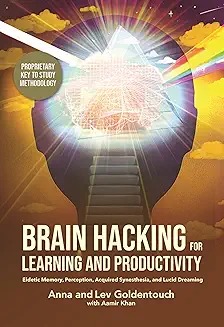
These ideas are explored in depth in the book Brain Hacking for Learning and Productivity: Eidetic Memory, Perception, Acquired Synesthesia, and Lucid Dreaming, which examines how cognition emerges from the interaction between brain regions, bodily systems, and perception. Rather than relying on motivation alone, real mastery begins by understanding how the body and mind operate together.
This article explores how multiple “brains” coordinate intelligence, how hyperfocus amplifies learning, how gut signals influence decisions, why sensory sensitivity matters, and how hormones govern energy and attention.
The Reality of Multiple Brains
The human nervous system is not governed by a single command center. Instead, intelligence is distributed across several interconnected systems, each with its own role and partial autonomy.
The Cranial Brain and Its Layers
Inside the skull, the cranial brain contains several distinct systems. The neocortex enables abstract reasoning, planning, and conscious thought. It is a folded, six-layered sheet densely packed with long, myelinated neurons that allow rapid communication across distant regions. This speed comes at a cost of space, reflecting an evolutionary trade-off favoring coordination over efficiency.
Beneath it lies the limbic system, which governs emotion and memory. Structures such as the hippocampus shape memory formation, while the amygdala rapidly detects threat and emotional significance. These regions operate faster than conscious reasoning, often shaping responses before awareness emerges.
The reptilian brain, evolutionarily older, manages instinctive survival behaviors. Though often dismissed as primitive, it plays a crucial role in automatic regulation and basic drives.
The Cerebellum’s Hidden Power
At the back of the skull sits the cerebellum. Though small in size, it contains more neurons than the rest of the brain combined. Its function lies in timing, coordination, and precision. Rather than controlling thought, it refines movement and rhythm, ensuring actions unfold smoothly and accurately.
Together, these systems balance instinct, emotion, and reasoning into a single functional whole.
Intelligence Beyond the Skull
The Spinal Brain
Outside the skull lies the spinal cord, containing hundreds of millions of neurons. Though smaller than the cranial brain, its neurons are heavily myelinated, allowing rapid signal transmission. This speed enables reflexes that protect the body before conscious awareness occurs.
Training strengthens these circuits. Through repetition, movements become automatic. Athletes, musicians, and skilled workers rely on this spinal intelligence, allowing action without conscious deliberation. Learning, therefore, is not limited to thought but is embedded in the body itself.
The Gut Brain
Perhaps the most overlooked system is the enteric nervous system, embedded within the digestive tract. With over 100 million neurons, it regulates digestion, absorption, and elimination. Yet its influence extends far beyond digestion.
Most of the body’s serotonin receptors are located in the gut, linking digestion directly to mood. Anxiety, excitement, or calmness often appears as a physical sensation before becoming a conscious emotion. Gut bacteria further influence neurotransmitters, shaping resilience, stress response, and emotional balance.
What has long been called a “gut feeling” is increasingly understood as a genuine form of biological intelligence.
Hyperfocus: The Gift and the Risk
Hyperfocus represents one of the most powerful yet unpredictable mental states. It involves sustained, immersive attention where the external world fades, and engagement becomes total.
Identity and Deep Immersion
During hyperfocus, attention shifts from “doing” an activity to “becoming” it. The task and the individual merge. This level of immersion allows insights, pattern recognition, and breakthroughs that casual attention cannot produce.
However, hyperfocus resists interruption. External demands often provoke frustration, as disengaging feels unnatural and disruptive.
The Profession–Hobby Paradox
Hyperfocus arises most naturally in hobbies driven by curiosity and enjoyment. When the same activity becomes a profession, external pressures such as deadlines and expectations alter the experience. While skill deepens, spontaneity often declines.
Those who sustain long-term mastery are typically those who preserve playfulness within structured work, allowing hyperfocus to remain a source of renewal rather than exhaustion.
Feedback Loops and Memory Distortion
Hyperfocus feeds on feedback. Each success reinforces immersion, creating a self-sustaining loop. However, memory of hyperfocus is selective. Sometimes the clarity is remembered while fatigue is forgotten; other times, frustration overshadows achievement. This distortion shapes future engagement, influencing whether hyperfocus is sought or avoided.
Hyperfocus and Learning Capacity
Hyperfocus is often confused with intelligence, yet they are distinct. Intelligence may open doors, but hyperfocus enables repeated entry. People of average intelligence often achieve extraordinary mastery through sustained, obsessive focus on a single domain.
This sustained attention enhances learning, pattern detection, and memory consolidation. Over time, deep focus can rival or exceed the impact of raw cognitive ability alone.
The challenge lies in managing hyperfocus rather than being controlled by it.
Gut Feelings, Serotonin, and Intuition
The Gut as a Chemical Messenger
The gut communicates continuously with the brain through nerves and hormones. Stress hormones activate digestive responses long before conscious interpretation occurs. Chronic stress, common in modern life, keeps these systems activated far beyond their natural duration.
Gut bacteria influence serotonin and dopamine activity, shaping mood and emotional stability. Changes in diet, sleep, or stress can alter these signals dramatically.
Intuition and Hormonal Loops
Intuition emerges from a loop between anticipation, hormones, and action. Sometimes the body signals first, guiding decisions before reasoning catches up. At other times, expectation triggers hormonal shifts that feel like intuition.
These signals can be accurate or misleading. Awareness of their biological roots allows intuition to be respected without being blindly obeyed.
Differences in Sensitivity
Hormonal differences influence gut sensitivity. Testosterone tends to blunt gut signals, while oxytocin amplifies them. This contributes to variations in intuitive sensitivity across individuals. Rather than stereotypes, these differences highlight the importance of bodily awareness in decision-making.
Misophonia and Sensory Overload
Misophonia challenges the assumption that sensory experience is shared equally. For those affected, everyday sounds trigger intense emotional and physiological reactions.
Amygdala Hijack and Social Impact
Misophonia involves rapid activation of the amygdala before rational processing occurs. Sounds are perceived as threats rather than neutral stimuli. When others dismiss these reactions, emotional distress intensifies, creating isolation and misunderstanding.
Learning and Productivity Effects
In classrooms and workplaces, misophonia disrupts executive functions such as focus and planning. Minor noises can consume attentional resources, leaving little capacity for learning or problem-solving.
Yet heightened sensory wiring can also offer advantages. Some individuals demonstrate exceptional auditory perception, benefiting fields such as sound design or music when environments are supportive.
Sensory Focus and Selective Attention
Focus depends not only on thought but on how the senses filter information.
Training the Senses
Sensory focus involves consciously choosing what to notice and what to ignore. By anchoring attention through a dominant sense such as sight, sound, or breath, the nervous system aligns with intention.
This filtering requires balance. Excessive narrowing leads to rigidity, while excessive openness invites distraction. Mastery lies in shifting between these modes intentionally.
Energy, Hormones, and Sustained Focus
Focus is governed by hormonal orchestration rather than discipline alone.
Stress Hormones and Attention
Cortisol sharpens attention in short bursts but undermines focus when chronically elevated. Adrenaline provides brief energy surges, while prolonged exposure leads to exhaustion.
Dopamine and Motivation
Dopamine sustains effort by rewarding progress. Superficial dopamine spikes from constant notifications weaken deep attention, while slower dopamine release from meaningful work builds endurance and direction.
Flow as Hormonal Balance
Flow emerges when dopamine, norepinephrine, and endorphins align. Too much stress or too little motivation disrupts this state. Sleep, nutrition, and rhythm determine whether hormones cooperate or compete.
Working with biological cycles rather than against them allows productivity without burnout.
Conclusion
Learning, focus, and productivity are not isolated mental skills. They emerge from a distributed system of brains, hormones, senses, and feedback loops. Intelligence lives in movement, digestion, perception, and chemistry as much as in thought.
By understanding how hyperfocus amplifies learning, how gut signals shape decisions, how sensory sensitivity alters attention, and how hormones govern energy, mastery becomes sustainable rather than exhausting. Awareness replaces force, and alignment replaces struggle.
Take the Next Step Toward Lasting Focus and Mastery
If these ideas about focus, energy, and distributed intelligence resonated with you, they are explored in far greater depth in the book Brain Hacking for Learning and Productivity: Eidetic Memory, Perception, Acquired Synesthesia, and Lucid Dreaming. The book presents a clear, structured framework for understanding how learning, memory, and perception truly work, and how these mechanisms can be aligned for long-term productivity and mental clarity.
For those who want practical guidance, the ProlificFocus: Wellbeing, Hobbies and Sleep-Hacking Masterclass is designed to help you apply these concepts in everyday life. The course focuses on building sustainable focus, managing energy, and working with your natural biological rhythms rather than fighting against them.
To access the course, reach out directly via info@keytostudy.com and start developing focus that enhances both performance and well-being over the long term.