
Many people try to read faster, remember more, or stay focused longer, and fail. Not because the techniques are ineffective, but because the mindset, structure, and motivation required to support those techniques are missing. Learning is not just mechanical. It is psychological, environmental, and deeply personal.
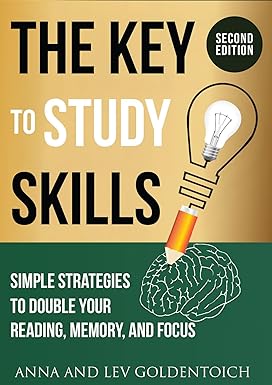
This is the central idea explored in The Key to Study Skills (2nd Edition): Simple Strategies to Double Your Reading, Memory, and Focus. Before improving speed, memory, or comprehension, learners must first understand themselves, their texts, and how to train consistently without burnout.
This article brings together the full framework, showing how learning success depends on identity, goals, training intensity, creativity, sleep, habits, and structured practice. If learning has felt frustrating, inconsistent, or overwhelming, the problem may not be your intelligence, but your system.
Knowing Yourself: Learning Styles Shape Learning Outcomes
No two learners think the same way. Every individual has a unique mix of strengths and weaknesses that directly affect reading speed, memory creation, visualization, and focus. Understanding your dominant learning style allows you to adapt techniques instead of fighting your nature.
The Technocrat Mindset
Technocrats are highly logical thinkers, commonly found among engineers and programmers. They excel at structured thinking, processes, mind maps, and logical flows. Their strength lies in speed and efficiency, particularly when handling dense or structured material.
However, technocrats may struggle with visualization. This limitation does not prevent progress, but it requires conscious training. Their advantage is the ability to adapt reading speed precisely to content density, making them exceptionally efficient once strategies are aligned.
The Artist Mindset
Artists visualize effortlessly, sometimes too effortlessly. Their imagination can expand beyond the text, creating details that were never written. This makes them excellent at memory palaces and creative marker generation.
The challenge for artists is control. During speedreading, they must avoid spending too much time creating markers and monitor pacing carefully. Creativity is a powerful asset, but only when balanced with discipline.
The Sportsman Mindset
Sportsman learners thrive on goals, pressure, and performance. They push hard, work intensely, and often achieve high speed and accuracy. Techniques with structured outputs, such as PAO memory systems, resonate strongly with them.
Their risks include skipping foundational steps, ignoring rest, and pushing speed beyond comprehension. When trained correctly and guided carefully, sportsmen often achieve the best balance of speed and understanding.
The Perfectionist Mindset
Perfectionists believe every word matters. This leads to slower reading but often very high retention. They create excellent visualizations but may forget to link ideas together effectively.
Common perfectionist traps include memorizing definitions instead of understanding concepts, focusing on either speed or quality (but not both), and resisting gradual progression. Their greatest strength is persistence; when properly guided, perfectionists build lifelong skills.
Setting Personal Goals That Actually Work
Every learner comes with a personal agenda. Learning succeeds when goals are explicit, written, and aligned with one’s style. Vague intentions lead to vague results.
Effective learners:
- Identify their dominant and complementary styles
- Adjust expectations based on strengths and weaknesses
- Create adaptive plans instead of rigid rules
Learning is not about becoming someone else. It is about becoming more effective as yourself.
The Discontinuity Principle: Why Routine Kills Thinking
The brain thrives on novelty. Familiar routines reduce stimulation, while disruptions force new connections. This principle, sometimes described as a “provocative operation, helps break habitual thinking patterns.
Simple disruptions can reignite creativity:
- Changing work hours or routes
- Reading unfamiliar material
- Watching or listening to new genres
- Trying unfamiliar foods or routines
Creative insight often emerges from friction between ideas. When thoughts collide, new pathways form.
Creativity Barriers You Must Recognize Early
Creativity is essential for building memory markers and understanding complex material. Yet most creativity barriers are internal.
Common obstacles include:
- Constant busyness
- Fear of criticism or failure
- Stress and negative self-talk
- Rigid routines and entrenched beliefs
- Ego-driven attachment to being “right.”
Believing you are “not creative” is one of the most damaging blocks. Identity shapes behavior. When learners adopt the belief that creativity is learnable, they naturally seek the skills that support it.
Affirmations are not motivational fluff; they are tools for identity formation.
Sleep Hacking: Memory and Focus Depend on Rest
Sleep is not wasted time. It is a cognitive performance multiplier.
Only a small percentage of people can function on very little sleep without damage. Most learners require 6–8 hours, with REM sleep playing a crucial role in memory consolidation, creativity, and problem-solving.
Key principles include:
- Avoid breaking REM cycles unnecessarily
- Use short naps strategically
- Combine sleep with meditation for greater efficiency
For optimal performance:
- Sleep 6 hours per night
- Take a 20-minute siesta
- Meditate 15 minutes before sleep and after waking
If memory drops or mood swings appear, the solution is often more sleep, not more effort.
Knowing Your Texts: One Strategy Never Fits All
Not all texts are meant to be read the same way. Effective learners adapt their approach based on text type.
Facts and Anecdotes
Common in blogs, history, and self-development. Speedreading with high retention is ideal here.
Data-Heavy Texts
Statistics, financials, and poetry require slower reading and careful retention. Speed is not the goal; accuracy is.
Deep Understanding Texts
Science and engineering demand rereading and conceptual clarity. Strategy matters more than speed.
Web Search Texts
Sometimes the goal is to locate information quickly. Prereading at a very high speed helps narrow focus efficiently. Clear goals must match the text type. Training without this distinction leads to frustration and false expectations.
Training Intensity, Duration, and Scheduling
Learning speedreading and memory skills is a long-term investment. The most effective learners train within defined limits.
Best practices include:
- A 3–4 month learning window
- At least 1 hour of reading per day
- Short, focused training sessions
- Regular rest breaks
- At least two full rest days per week
Overtraining leads to burnout. Undertraining leads to stagnation. Balance sustains progress.
Keeping a training diary helps identify patterns, mistakes, and recovery needs.
Brain Games vs Real Reading Skills
Brain games improve the skills they measure, but rarely transfer automatically to real-world reading.
True improvement happens when:
- Training exercises are integrated into actual reading
- Skills are used daily
- Reading materials are varied and challenging
New books and real-world experiences enhance intelligence, creativity, and comprehension far more effectively than isolated games.
Raising the Bar Without Burning Out
Early learning requires quick wins. Confidence builds momentum.
Learners should:
- Start with enjoyable tasks
- Focus on habits before results
- Build rituals instead of relying on motivation
- Stack skills gradually
Progress is non-linear. Bad days do not mean failure. The priority is consistency, not scores.
The goal is not a high score; the goal is a durable skill.
Visualization, Goals, and Mental Conditioning
Visualization is not a single technique; it serves different purposes:
- Goal simulation
- Scenario planning
- Stress regulation
- Confidence reinforcement
When combined with clear goals and controlled arousal, visualization becomes a powerful tool for persistence and performance.
Once goals are set and scenarios visualized, action becomes mandatory. Planning without execution leads nowhere.
First Training: Turning Theory Into Action
The KeyToStudy system uses exercises inspired by the tachistoscope principle, which trains visual perception and working memory under time constraints.
Core training areas include:
- Linking markers
- Short-term visual memory
- Sliding word exercises
- Accuracy and difference detection
These exercises support strategy development, not dependency. Over time, strategies replace exercises.
Daily reading, even without formal training, protects against skill degradation.
Conclusion: Learning Is a System, Not a Trick
Speedreading, memory, and focus are not genetic gifts or magic tricks. They are trainable systems built on mindset, structure, and persistence. When learners understand themselves, respect rest, choose the right strategies, and practice consistently, improvement becomes inevitable.
Take Your Study Skills to the Next Level
If you’re ready to move beyond scattered tips and build a clear, proven system for reading faster, remembering more, and staying focused, your next step is The Key to Study Skills (2nd Edition): Simple Strategies to Double Your Reading, Memory, and Focus. This book transforms the principles discussed above into a structured, step-by-step roadmap designed for real learners who want consistent results, not short-term motivation.
For faster progress and guided implementation, KeyToStudy: Memory Masterclass provides focused training that helps you apply these strategies with precision and confidence. It’s built to strengthen memory, sharpen concentration, and develop long-term learning efficiency.
📩 For exclusive course discounts and personal guidance, contact me directly at info@keytostudy.com and take a decisive step toward mastering how you learn.