
Most people believe productivity is a constant state, something that can be sustained with discipline, better tools, or longer hours. In reality, productivity is inherently cyclical, shaped by environment, energy, focus, and time. Ignoring these cycles leads to frustration, burnout, and diminishing returns.
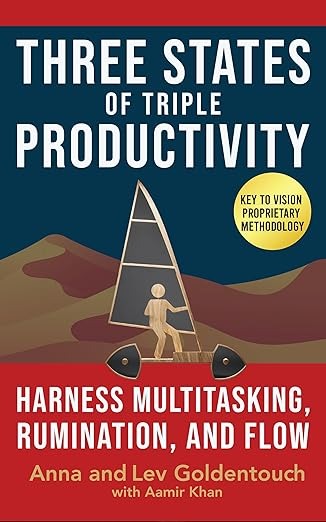
This reality is explored in depth in THREE STATES OF TRIPLE PRODUCTIVITY: Harness Multitasking, Rumination and Flow, which reframes productivity not as relentless output, but as the intelligent management of mental and energetic states. Rather than forcing consistency, sustainable performance comes from understanding when and how productivity naturally emerges.
This article examines three interrelated ideas: avoiding toxic environments, accepting that we are often not productive, and learning to transmute time, focus, and energy into one another. Together, they form a practical framework for working with human limits rather than against them.
The Hidden Cost of Toxic Environments
A toxic environment drains energy before meaningful work can even begin. Instead of addressing real challenges, individuals and teams become occupied with politics, defensive behavior, and emotional self-regulation. Productivity losses in such settings are not subtle; they are structural.
Research consistently shows that disengagement caused by toxic cultures leads to massive economic losses and weaker performance metrics. The root issue is not skill or intelligence, but sustained erosion of motivation and emotional balance.
The most critical element affected by toxicity is energy. Without a positive baseline mindset, even well-designed workflows fail. While motivation is a complex topic on its own, effective productivity systems assume a minimum level of psychological safety and pragmatic optimism.
Understanding why focus breaks down and how attention is disrupted is essential to reversing this pattern, as explored in Lose Focus: Why It Happens and the Underlying Causes.
Seasonal and Personal Energy Cycles
Toxicity does not always originate from organizations. Sometimes it emerges from natural cycles of energy that are misunderstood or ignored. Human performance fluctuates daily, weekly, and seasonally, influenced by biological rhythms and external conditions.
Long winters, intense summers, or high-pressure periods around holidays often amplify fatigue and stress. These fluctuations are not signs of weakness but predictable patterns. Treating them as personal failures compounds the problem.
Effective productivity strategies adapt to these cycles rather than resisting them. When energy is low, expectations should shift. When energy rises, opportunities for deeper focus should be seized. Awareness replaces guilt, and planning replaces force.
The Problem of Self-Toxicity
Beyond external conditions, individuals can become toxic to themselves. Overanalysis, emotional rigidity, and isolation often lead to tunnel vision. Even highly capable professionals can miss obvious solutions when overly immersed in details.
Collaboration and mentorship act as corrective mechanisms. External perspectives reveal blind spots that internal reasoning cannot. This is not a matter of intelligence, but of cognitive limitation under sustained mental load.
Seeking feedback is not a weakness. It is a productivity multiplier that prevents wasted effort and misdirected persistence.
This pattern is common in modern cognitive work and is closely related to hyperfocus and multitasking challenges, discussed in depth here: Hyper-focus, multitasking, and the wonderland of ADHD.
Waste: The Invisible Productivity Killer
A significant portion of lost productivity comes from waste energy spent on unnecessary actions, inefficient planning, or poorly designed processes. Waste often goes unnoticed because it feels familiar.
Reducing waste requires conscious effort and patience. Initially, performance may dip as new systems are adopted. Over time, however, systematic reduction of inefficiencies leads to higher output with lower strain.
Even planning itself can become wasteful if it lacks clarity or purpose. The goal is not more planning, but better alignment between effort and outcome.
Boredom and Arousal Mismatch
Boredom is not the absence of work. It is a mismatch between task difficulty and mental arousal. When tasks are too easy or repetitive, energy declines and focus deteriorates.
Optimal productivity comes from matching activities to current arousal levels:
- High alertness favors demanding, complex tasks
- Moderate alertness supports interpersonal or analytical work
- Low alertness is best reserved for routine or administrative tasks
Maintaining a diverse portfolio of activities allows smoother transitions between states, preventing both burnout and stagnation.
Emotional Intelligence as a Productivity Skill
Managing cycles, waste, boredom, and collaboration requires emotional intelligence. Self-awareness enables recognition of declining energy. Self-regulation allows strategic adjustment. Social awareness enables timely support from others.
Emotionally intelligent individuals align tasks with internal states rather than fighting them. This alignment is a defining trait of sustainable high performers across disciplines.
Why We Are Often Not Productive
Contrary to popular belief, humans are not designed for continuous high output. Time constraints, energy mismatches, and divided attention make sustained productivity unrealistic.
What matters is not being productive all the time, but being highly productive at the right time. A small fraction of focused effort often produces the majority of meaningful results.
This insight reframes productivity as preparation. Most effort is spent organizing, learning, coordinating, and waiting so that peak moments can be fully leveraged when they arrive.
Embracing Productivity Peaks
Peak productivity windows are limited and valuable. During these periods, interruptions must be minimized and resources fully prepared.
The majority of work exists to support these peaks:
- Gathering information
- Removing obstacles
- Coordinating dependencies
- Preserving energy
When this structure is respected, even short bursts of intense focus can produce disproportionate impact.
Renewable Resources and Burnout Prevention
Time, focus, and energy are partially renewable resources. With proper planning, they can be replenished through rest, learning, negotiation, and process improvement.
Burnout occurs when renewal is ignored. Effective planning always includes recovery mechanisms. Without them, productivity declines regardless of effort.
Intentional downtime is not inefficiency. It is insurance against emergencies and cognitive overload.
Using Low-Activity Periods Strategically
Modern work often includes waiting periods. These intervals are unavoidable and unpredictable. Instead of resisting them, they can be used strategically.
Short waits suit light cognitive or reflective tasks. Longer waits allow learning or side projects. Task lists categorized by energy and focus levels enable better decisions in these moments.
Productivity is not measured by constant motion, but by intelligent allocation of attention.
Measuring Success Beyond Output
Many forms of work cannot be measured by simple metrics. Their value lies in problem-solving capacity, adaptability, and resilience under pressure.
High-performance periods are supported by seemingly unproductive phases. These phases provide the surplus energy required for complex challenges.
Understanding this balance prevents unnecessary self-criticism and improves long-term effectiveness.
Transmutation of Time, Focus, and Energy
Time, focus, and energy operate in different domains, yet they influence one another. Through deliberate action, one resource can be transformed into another.
Physical activity can convert excess energy into focus. Engaging material can convert focus into motivation. Rest can convert time into renewed energy.
This transmutation is not accidental. It is a skill developed through awareness and experimentation.
Multitasking and Resource Trade-Offs
Multitasking introduces complexity. While it can generate perceived time gains, it risks degrading focus and energy if misused.
Effective multitasking respects cognitive limits and avoids sacrificing recovery, particularly sleep. Sustainable productivity balances efficiency with preservation of mental resources.
Conclusion
Productivity is not a constant state, but a dynamic system shaped by environment, cycles, emotional intelligence, and strategic renewal. Toxicity, boredom, waste, and unrealistic expectations disrupt this system. Awareness, alignment, and preparation restore it.
Unlock the Next Level of Your Productivity
These principles are not just theories. They form the foundation of THREE STATES OF TRIPLE PRODUCTIVITY: Harness Multitasking, Rumination and Flow, a powerful guide that shows how peak performance naturally emerges when you work with your mental states instead of fighting them. The book offers a fresh, practical perspective for anyone who wants lasting productivity without burnout.
If you are ready to move from understanding to execution, the ProlificFocus: Productivity Masterclass (Time Management, Multitasking and Flow) turns these ideas into structured, real-world systems you can use immediately. It is designed for modern professionals who want clarity, control, and consistent high performance in their daily work.
Reach out directly at info@keytostudy.com to receive a special discount and take your next step toward sustainable, high-impact productivity that actually lasts.